
The Zettelkasten - What is it and how to effectively use it.
The Zettelkasten Method - Meet one of the most powerful note-taking methods.
In a world overloaded with information, finding effective ways to capture, organize, and retain knowledge is essential. One method that has stood the test of time, particularly in academic and research settings, is the Zettelkasten method. Rooted in the principles of non-linear thinking and associative learning, the Zettelkasten (German for "slip box") offers a powerful way to manage knowledge. Let’s dive into how this method works and how it can revolutionize your learning and creative processes.
What is the Zettelkasten Method?
The Zettelkasten method was developed by German sociologist and systems theorist Niklas Luhmann. Over his lifetime, Luhmann managed to write over 70 books and 400 scholarly articles, largely crediting his productivity to his Zettelkasten. His system was a collection of over 90,000 note cards linked together in an intricate web of ideas.

Niklas Luhmann (1927-1998) - German sociologist credited with developing the Zettelkasten method.
At its core, the Zettelkasten is a personal knowledge management system. It revolves around the idea of creating "atomic" notes—small, concise notes that capture a single thought, fact, or idea. Each of these notes is stored in a way that makes it easy to connect them with other notes, building a network of ideas over time. The Zettelkasten method stands out because it encourages non-linear note-taking and thinking, allowing your ideas to develop and grow through connections, rather than just through categories or hierarchies.
Key Concepts of the Zettelkasten Method
- Atomic Notes: Every note in the Zettelkasten should be self-contained and focused on a single idea. Instead of lengthy paragraphs, notes are brief but rich in meaning. This makes them easier to link to other concepts.
- Unique Identifiers: Each note is assigned a unique identifier, traditionally a combination of numbers and letters. This allows the notes to be referenced and connected to other notes, even if they were written at different times. In a modern digital Zettelkasten, these unique identifiers can be hyperlinks or tags.
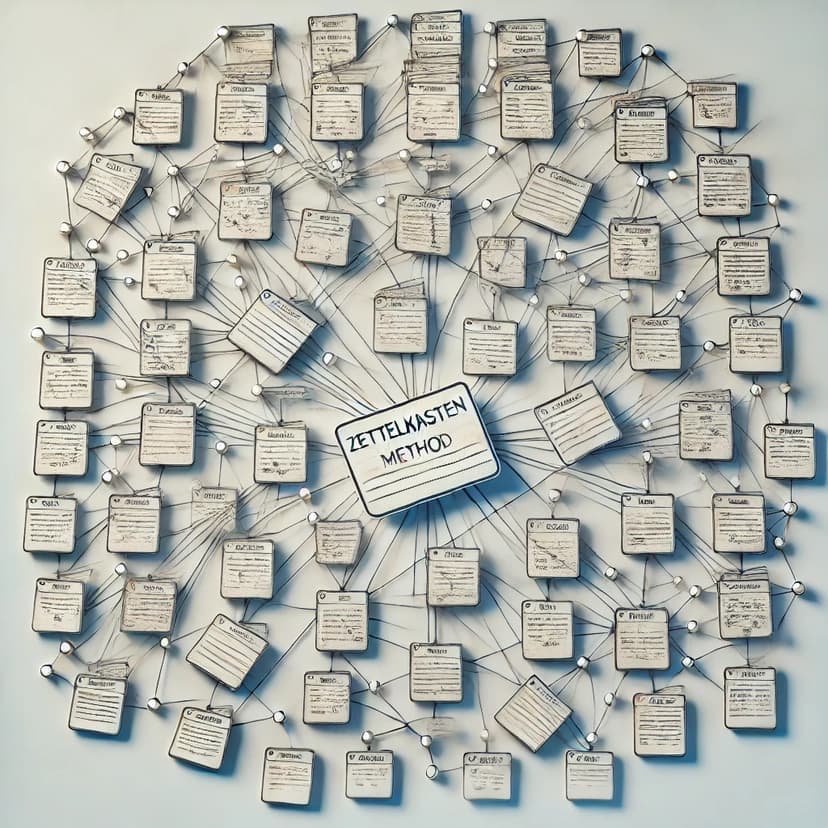
- Linking Notes: The true power of the Zettelkasten lies in its ability to link related notes. Each time you create a new note, you can link it to an existing one, forming a network of interconnected ideas. This encourages associative thinking, where you begin to see how disparate pieces of information relate to each other.
- Structure Notes: Structure notes act as meta-notes or index notes. They don’t contain new information but instead link to and organize other notes. They provide an overarching structure that helps you navigate through your network of ideas.
- Connection Over Collection: Unlike traditional note-taking methods where you collect and store information by topic or category, the Zettelkasten method emphasizes connections over mere collection. This means that the value of your Zettelkasten grows as you add more notes and connect them, allowing new ideas to emerge organically.